Bigelow
Product design
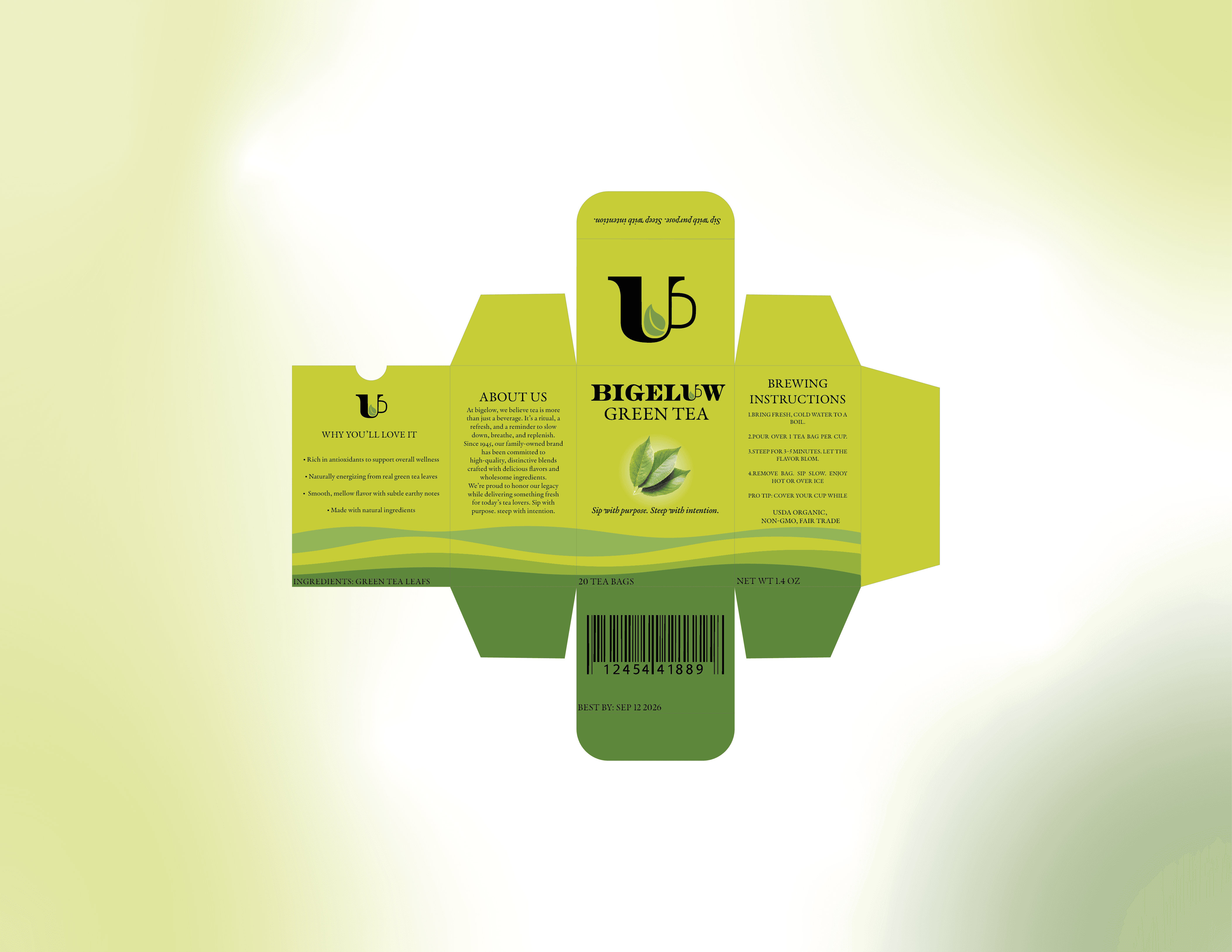
This case study explores a conceptual redesign of Bigelow Tea, focusing on refreshing its logo, packaging, and slogan to create a more modern, user-centered identity. Through branding, UX research, content design, UX writing, and graphic design, the project reimagines Bigelow as a timeless yet contemporary brand that balances tradition with clarity, accessibility, and strong shelf presence.
Role:
Product designer, UX Writer, Ux Designer
Industry:
Platform:
Overview
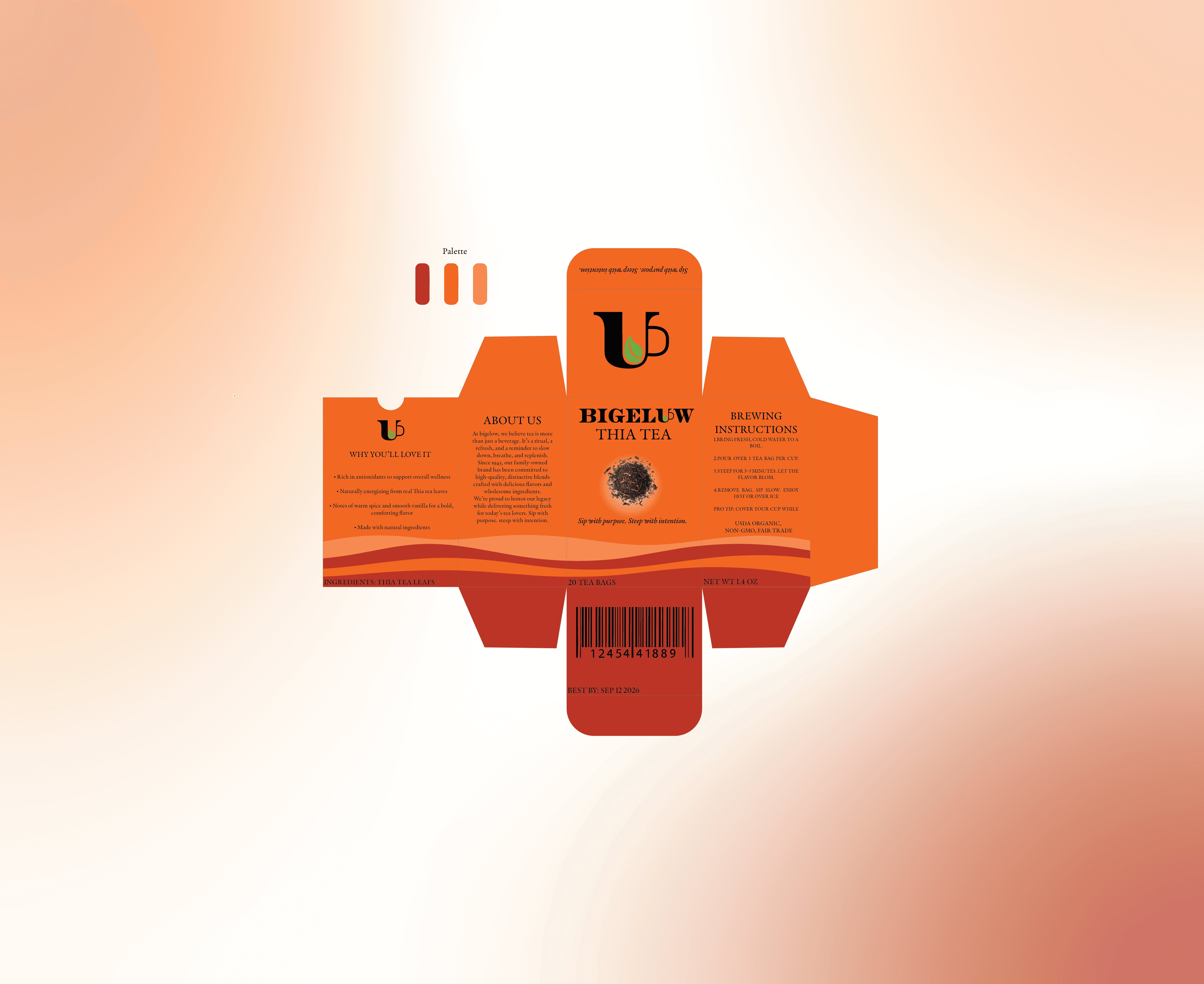
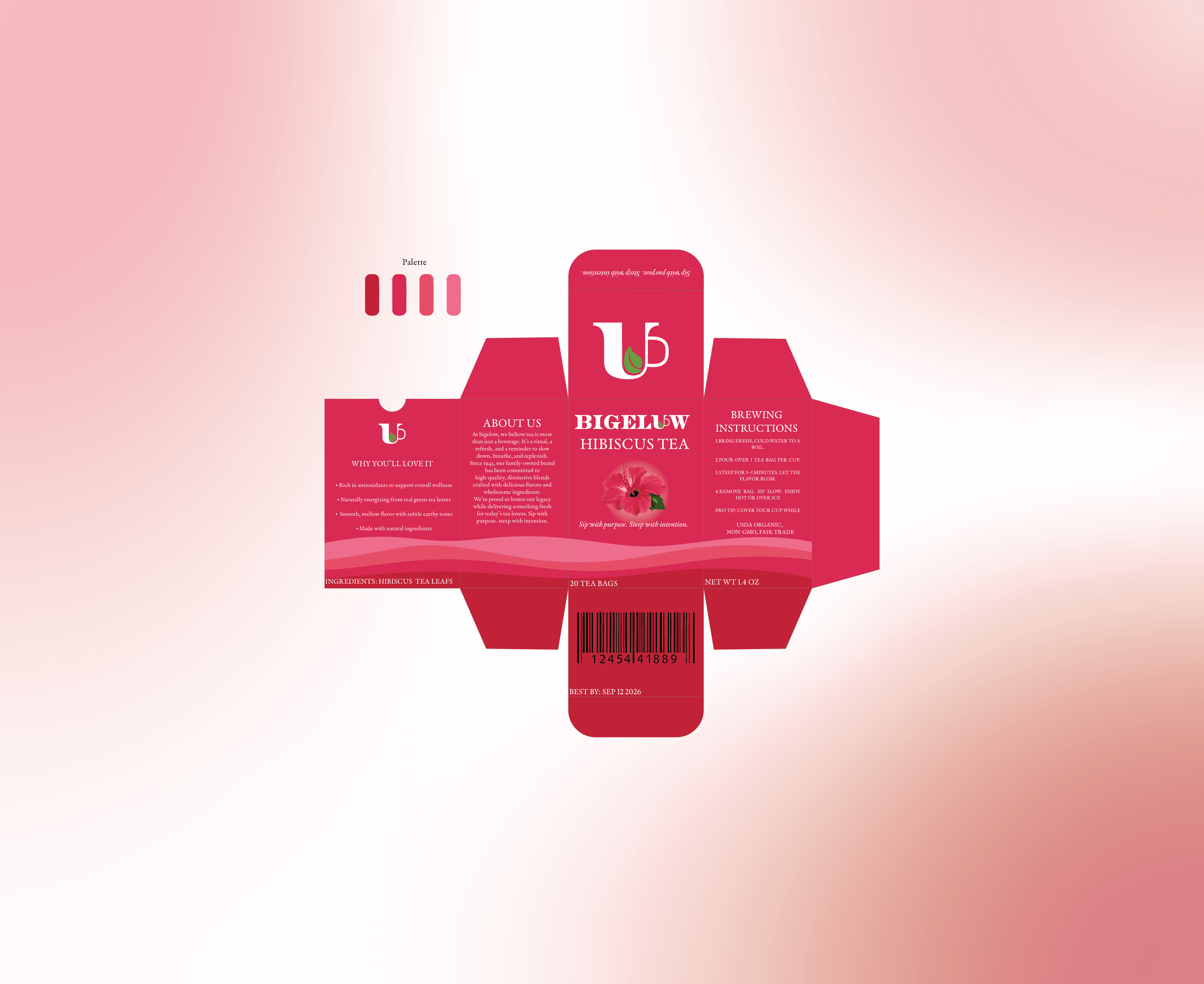
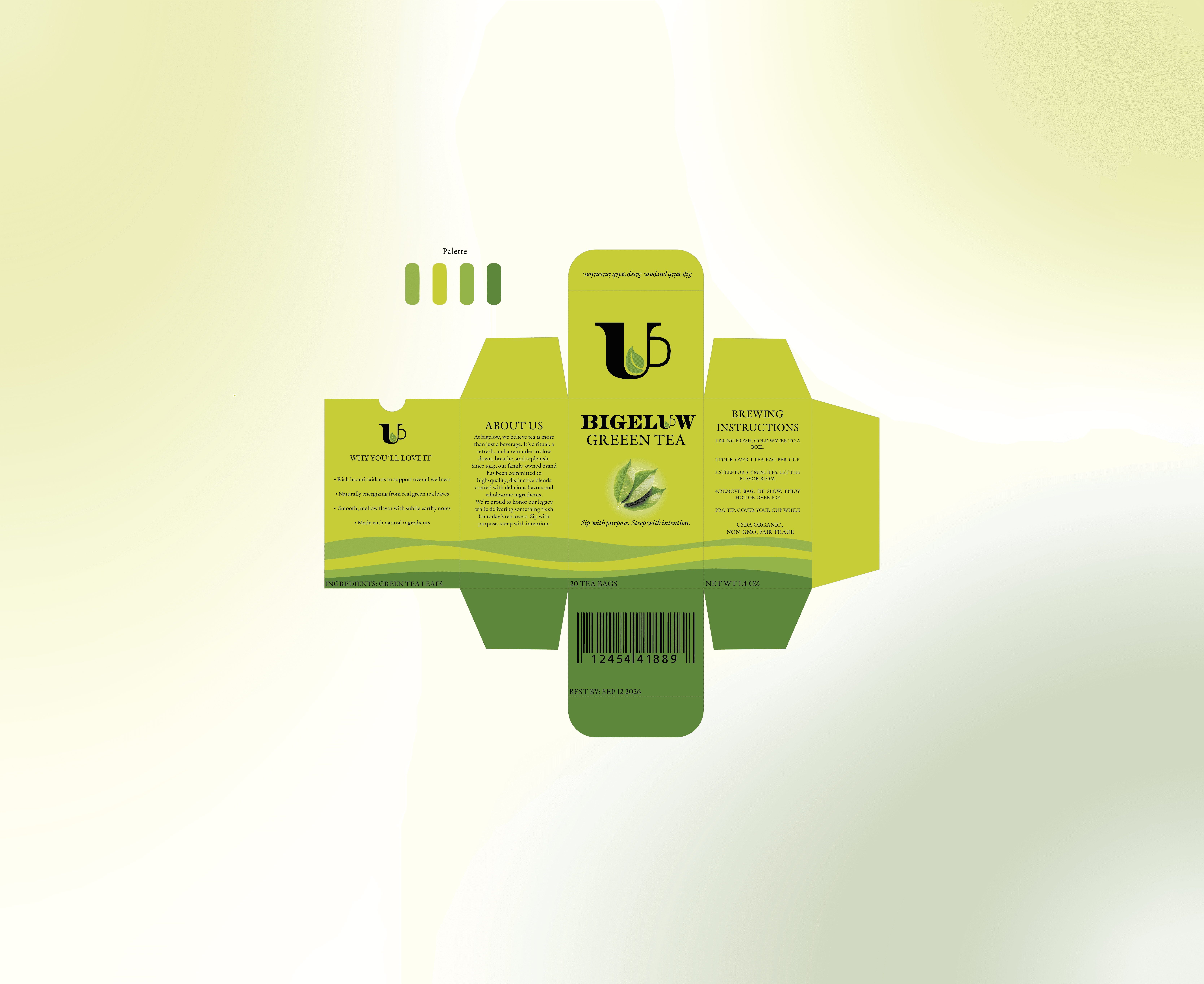
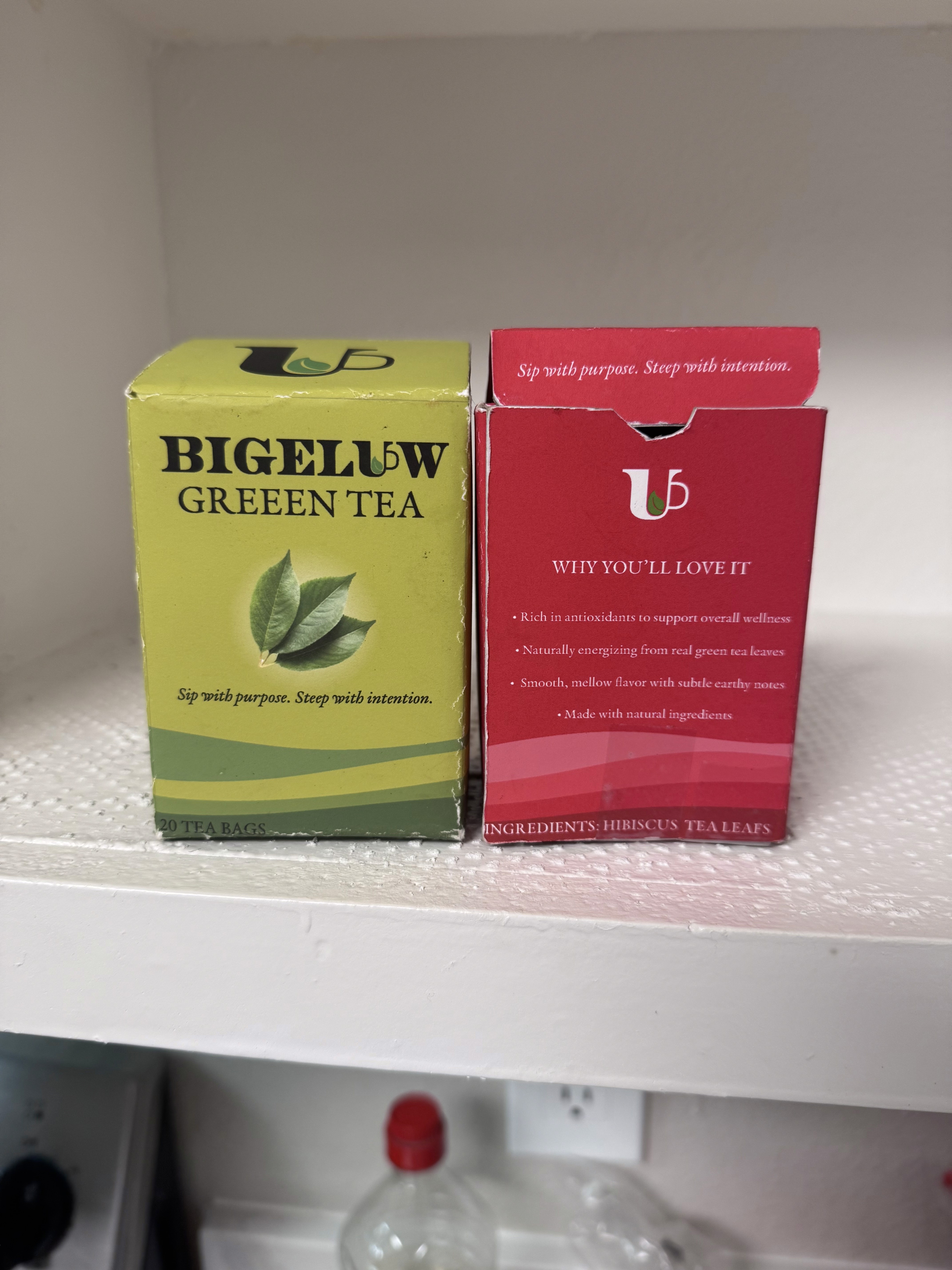
This project is a conceptual rebrand of Bigelow Tea, where I redesigned the logo, packaging system, and slogan to modernize the brand while honoring its heritage of wellness and comfort. The new logo introduces a clean, modern icon that combines a tea cup and leaf to symbolize natural ingredients and mindful ritual, while the updated slogan — “Sip with purpose. Steep with intention.” — reframes tea as more than a beverage, positioning it as a moment of pause and clarity. Each flavor, including Green, Thai, and Hibiscus, features its own distinct color palette and wave-inspired graphics to reflect unique taste profiles while remaining cohesive as a system. The redesign also emphasizes readability with simplified layouts, improved typography, and accessible product details. Together, these elements create a bold, design-forward identity that enhances shelf appeal, strengthens brand recognition, and positions Bigelow as both timeless and contemporary for a new generation of tea drinkers.
Problem Area
Bigelow Tea’s existing brand identity and packaging felt dated, inconsistent across flavors, and lacked a strong emotional connection with younger audiences. The packaging relied heavily on text with minimal visual hierarchy, making it harder to quickly identify flavors or key product details, while the logo and slogan no longer reflected the modern wellness-driven lifestyle that tea often represents. My objective in this redesign was to create a refreshed identity system that unified the brand across flavors, modernized its logo, and introduced a new slogan that positioned tea as a purposeful ritual. By enhancing visual clarity, strengthening shelf presence, and establishing a more cohesive and contemporary brand voice, the redesign aimed to appeal to both loyal customers and a new generation of tea drinkers seeking authenticity, wellness, and thoughtful design.
Solution
The solution was a complete brand refresh that reimagined Bigelow Tea’s logo, packaging, and slogan to create a cohesive, modern identity. The redesigned logo simplifies the brand mark into a symbolic tea cup and leaf, reflecting natural ingredients and mindful ritual, while the new slogan — “Sip with purpose. Steep with intention.” — reframes tea as an intentional daily practice. A unified packaging system was developed where each flavor, including Green, Thai, and Hibiscus, is distinguished by its own color palette and wave-inspired graphics that evoke taste and aroma while maintaining consistency across the line. Clearer typography, balanced layouts, and simplified product details improve readability and enhance the overall user experience. Together, these design choices strengthen Bigelow’s shelf presence, establish a contemporary voice, and position the brand as both timeless and relevant for today’s tea drinkers.



Project images
hey


Deep Dive
Design
Branding
Summary
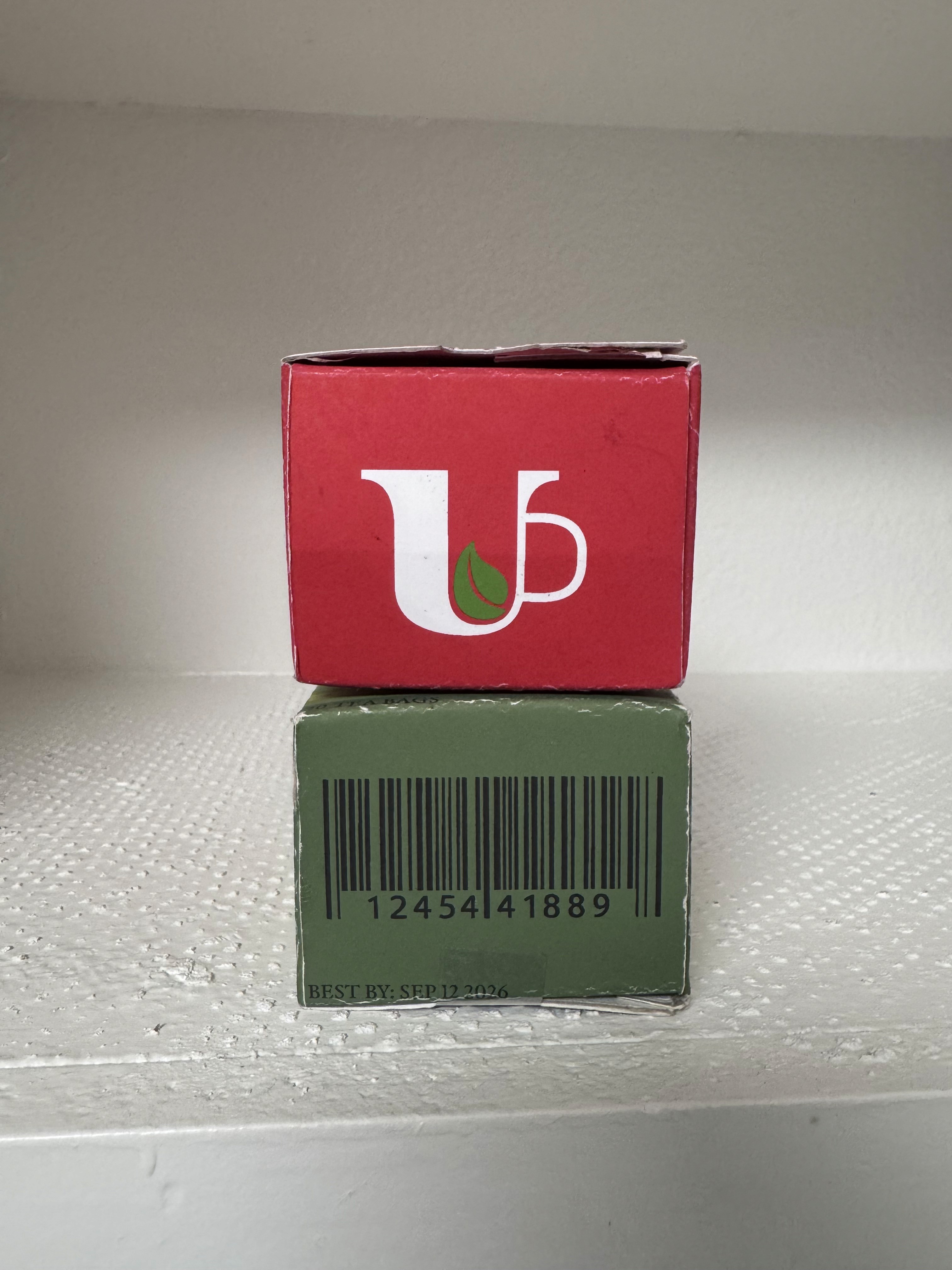
I approached branding as the foundation of this project. Bigelow’s existing identity felt fragmented, so I unified the look and feel through a redesigned logo, consistent use of visual motifs, and a structured packaging system. The new logo — a stylized tea cup formed with leaf-inspired shapes — communicates both nature and ritual, making the brand feel more intentional and modern. By applying the logo and branding system across all flavors, I created cohesion while still allowing each variety to have its own personality through color and imagery.
Keypoints
Redesigned logo as a symbolic tea cup + leaf combination.
Unified visual identity across all flavors through consistent motifs.
Balanced tradition with a fresh, modern aesthetic.
Built cohesion without losing the unique personality of each tea type.
UX Research
Summary
To ground my design decisions, I researched the tea boxing industry and analyzed how modern tea brands present themselves. This helped me understand how shoppers engage with packaging both in stores and at home. I found that modern consumers value clarity, consistency, and authenticity — so I focused on simplifying layouts, ensuring easy readability, and presenting tea as a meaningful ritual rather than just a product.
Keypoints
Studied competitor packaging for layout, hierarchy, and storytelling.
Observed modern consumer preferences for clarity, simplicity, and authenticity.
Applied insights to simplify design and increase readability.
Framed tea as a ritual rather than just a product.
Content Design
Summary
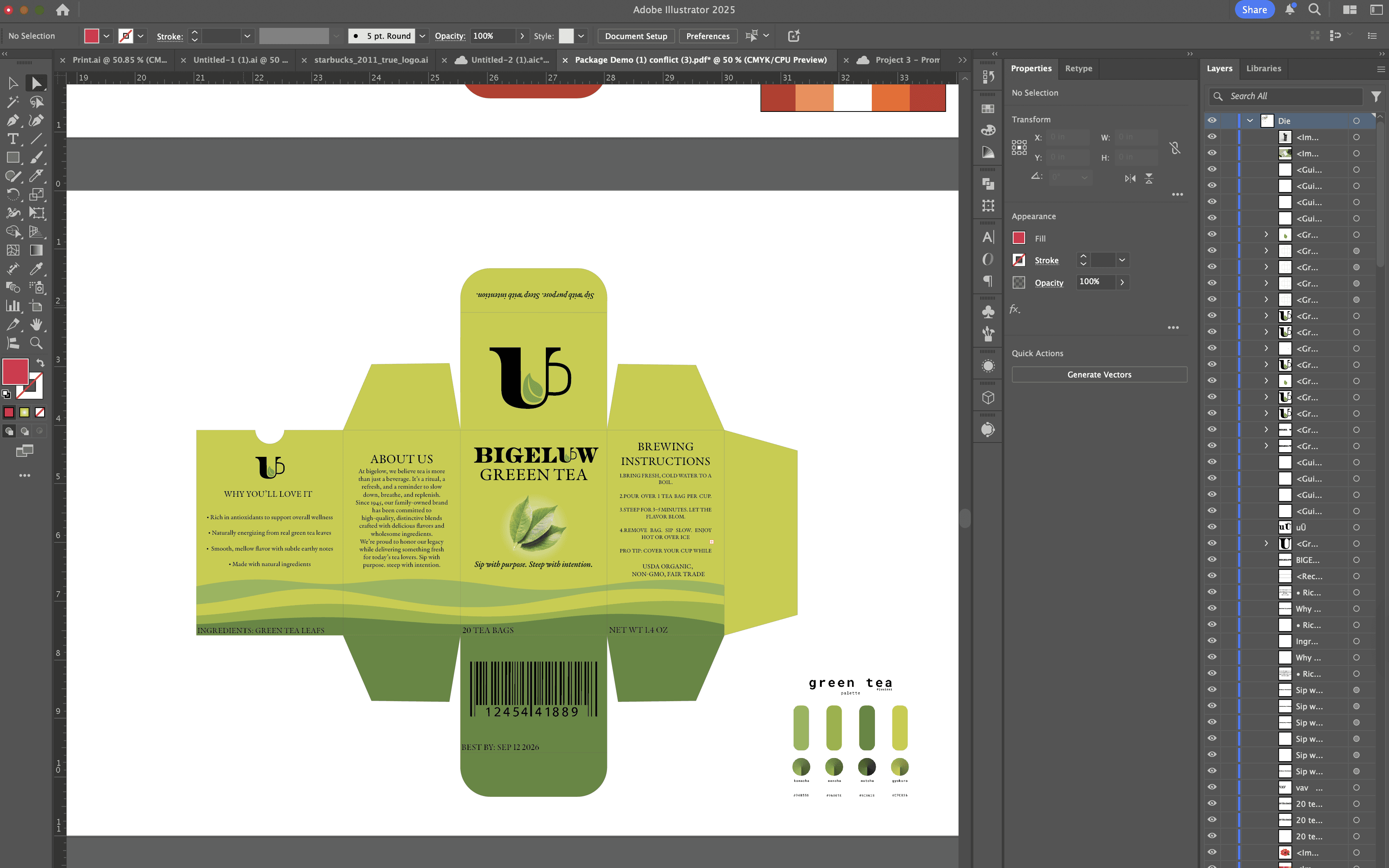
Content design was central to making the packaging useful and user-centered. I structured information around user needs: the front highlights the tea type and logo for quick recognition, the sides provide brewing instructions and brand storytelling, and the back explains why the tea is enjoyable, along with practical details like bag counts and recommended water measurements. I emphasized clarity by using concise, plain language; consistency by keeping tone and style aligned throughout; accessibility by ensuring strong color contrast; and contextual relevance by placing information exactly where the user would expect it.
Keypoints
Front: tea name + logo for quick recognition.
Side 1: brewing instructions with step-by-step clarity.
Side 2: brand storytelling to build trust.
Back: product value (“why you’ll like this tea”), bag count, and ounces per bag.
Ensured strong color contrast for accessibility.
Maintained consistent tone and style across all sides.
UX Writing
Summary
In line with content design, my UX writing approach focused on clarity, usefulness, and user alignment. I avoided jargon and internal company language, instead writing from the perspective of what the user needs to know in the moment. Instructions were simplified, descriptions were kept purposeful, and every word had to earn its place on the package. This kept the experience light and easy to navigate, while maintaining a consistent voice that reflects both warmth and reliability.
Keypoints
Used clear, straightforward language without jargon.
Avoided unnecessary text; every word had purpose.
Aligned with user goals rather than company-centered language.
Delivered information at the right time and place (instructions, descriptions, benefits).
Maintained consistency in tone and style across packaging.
Graphic Design
Summary
Visually, I aligned graphic design choices with the refreshed brand identity. Simplicity was a key principle — uncluttered layouts, clean lines, and balanced elements made the design approachable and functional. The graphics supported the story of each tea type without overwhelming the user, reinforcing the harmony between brand and product.
Keypoints
Clean, uncluttered layouts to enhance readability.
Graphics matched the flavor and story of each tea.
Balanced decorative elements with functional content.
Consistency in style tied visuals together across the product line.
Visual Hierarchy
Summary
I established hierarchy by scaling elements to guide the user’s eye: the logo and tea type were most prominent, followed by the slogan, supporting details, and secondary information. Dark-on-light contrast increased readability, and white space directed focus to key visuals like the logo and tea leaves. This hierarchy ensured that users could quickly scan the box, identify the product, and access relevant details without confusion.
Keypoints
Logo and tea type made largest for brand recognition.
Slogan presented smaller for secondary emphasis.
Dark-on-light contrast increased readability.
White space highlighted the logo and central tea imagery.
Flavor-specific colors reinforced recognition at a glance.
General Design Principles
Summary
Gestalt principles shaped how I organized content. Proximity grouped related details, continuity and closure supported flow across the layout, and common fate guided the eye from top to bottom. These principles created a natural rhythm in the design, making the box feel intuitive to navigate and aesthetically cohesive.
Keypoints
Proximity: grouped related text for clarity.
Continuity & Closure: structured layouts to guide flow.
Common Fate: used downward text alignment to direct eye movement.
Logical groupings created a natural, scannable rhythm.
Color Theory
Summary
I applied color theory to distinguish each flavor while keeping the system unified. Using hue and saturation adjustments, I built palettes that reflected the personality of each tea: calming greens for Green Tea, rich earthy tones for Thai Tea, and vibrant reds for Hibiscus. By controlling saturation and opacity, I maintained harmony across the line while ensuring strong contrast for readability. The colors not only signaled flavor but also reinforced the emotional tone of each tea.
Keypoints
Green Tea: calming greens for freshness.
Thai Tea: earthy tones for richness.
Hibiscus: vibrant reds for energy and vibrancy.
Adjusted hue/saturation for depth and harmony.
Ensured strong color contrast for accessibility.
Typography
Summary
I chose to retain Bigelow’s existing typeface for continuity, but reimagined how it functioned within the new system. Most notably, I modified letterforms to integrate them into the logo — transforming the “U” into a teacup shape, using the “W” for the handle — to tie typography directly into the brand’s new symbol. This decision preserved recognition while elevating the type to be part of the visual storytelling.
Keypoints
Retained original typeface for brand continuity.
Modified letterforms (U shaped into teacup, W as handle).
Integrated type directly into logo symbol.
Scaled typography to establish clear hierarchy (tea type > slogan > details).
Reflecting on the Design Process Revealed the Importance of Structure, Credible Research, and Continuous Testing
Summary
This project taught me the importance of balancing a brand’s heritage with modern design practices while grounding every creative choice in research and user needs. Through the redesign, I strengthened my ability to unify an outdated identity without losing its legacy and to weave branding, UX writing, content design, and graphic principles into a cohesive system. One of the biggest lessons I gained was the value of asking for feedback. Throughout the process, I sought out opinions from other designers, asking what they liked and what didn’t resonate with them. Their input pushed me to step back, reflect, and go through multiple iterations — something that made the final outcome far stronger than if I had worked in isolation. I also realized that while my creativity and problem-solving were strong, I lacked a structured plan at the beginning. I jumped straight into designing without setting up a clear roadmap, which sometimes made it harder to stay focused or track progress. Moving forward, I want to establish a better project framework at the start — outlining goals, timelines, and checkpoints — so that I can approach problems more intentionally while still leaving room for flexibility and experimentation. Ultimately, this project showed me that good design is not only about aesthetics but also about communication, clarity, collaboration, and iteration. It reminded me that design is a process of learning, refining, and telling a story that connects with users in a meaningful way.
Keypoints
Learned to unify an outdated brand identity without losing its legacy.
Strengthened content design and UX writing skills through clarity, consistency, and accessibility.
Understood the power of hierarchy and Gestalt principles in guiding the user’s eye.
Gained experience applying UX research insights to packaging and brand design.
Discovered the importance of seeking feedback from other designers to improve iterations.
Learned that iteration and collaboration create stronger outcomes.
Recognized the need for better upfront planning and structure in future conceptual case studies.
Realized that strong design is not only about aesthetics but also about communication, clarity, and emotional connection.
Closing
Thank you for taking the time to review this case study. I appreciate your interest in my work and the opportunity to share my design process with you. If you’d like to connect, collaborate, or discuss this project further, my contact information is available at the bottom of the page.