LA Marathon
Product Design
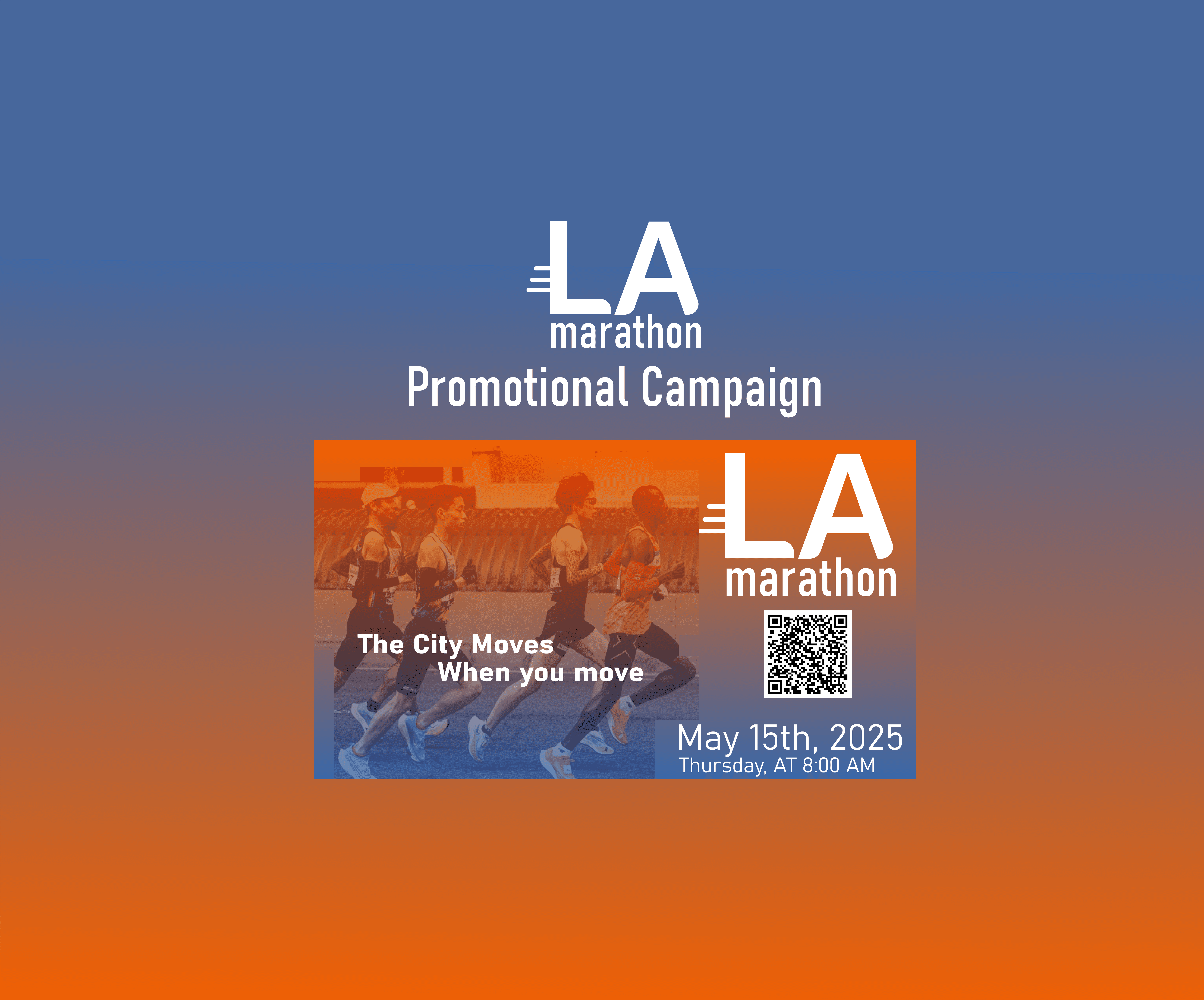
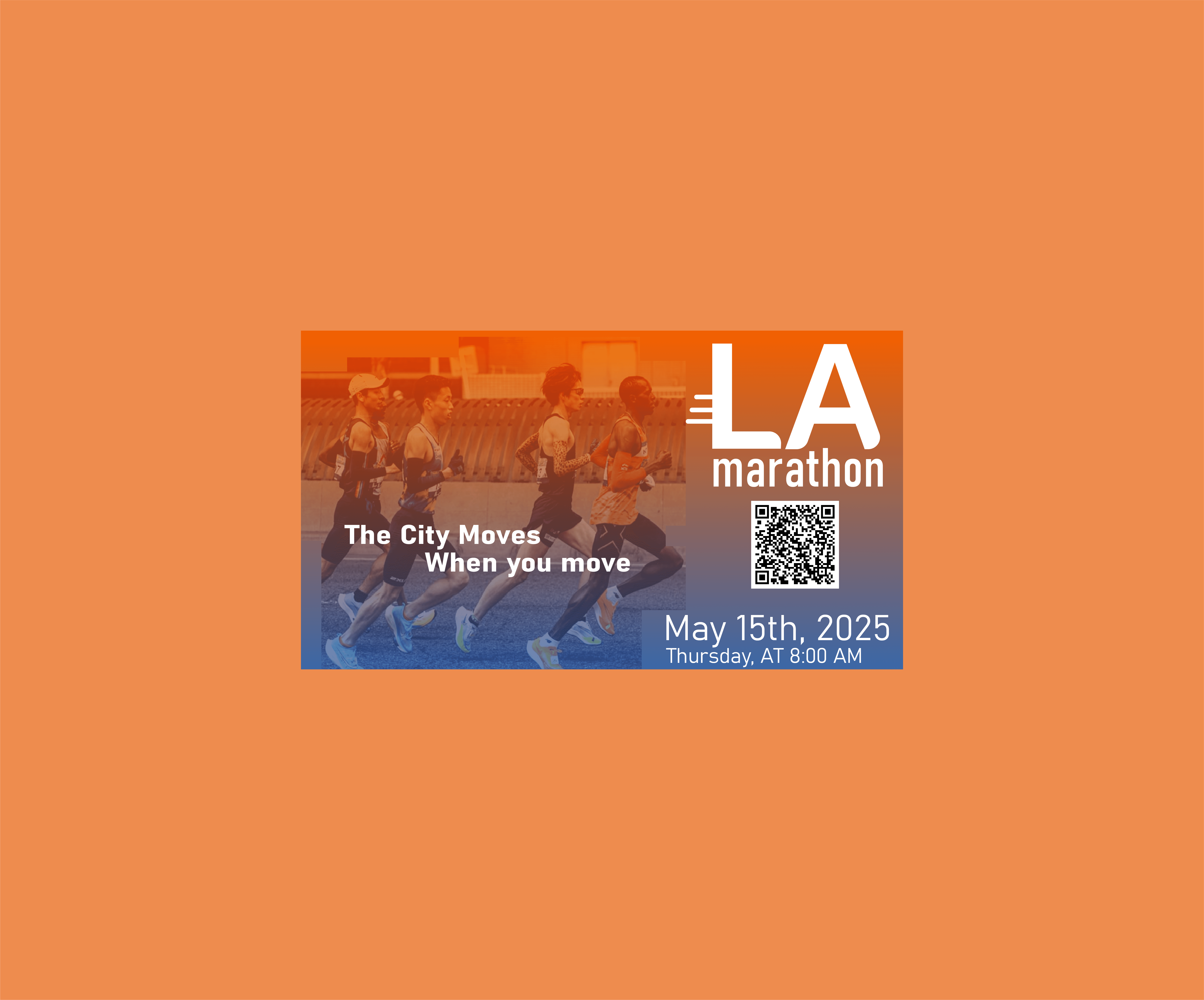
A promotional campaign concept for the Los Angeles Marathon featuring a custom logo, bold poster design, social media ads, and merchandise mockups. Built around the slogan “When you move, the city moves,” the project explores branding, typography, color theory, and accessibility to create a cohesive and energetic identity system.
Role:
Product Design
Industry:
Platform:
Overview
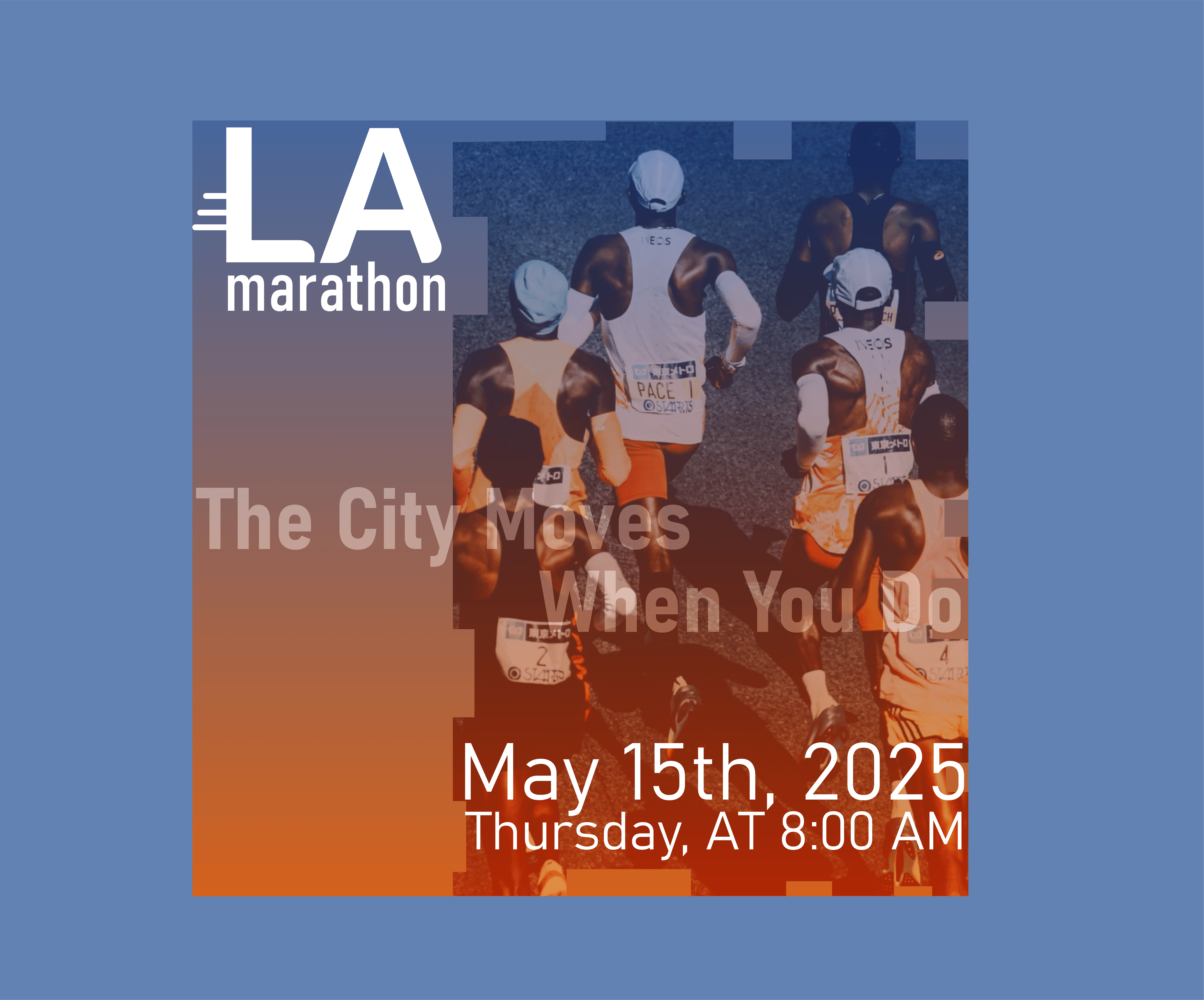
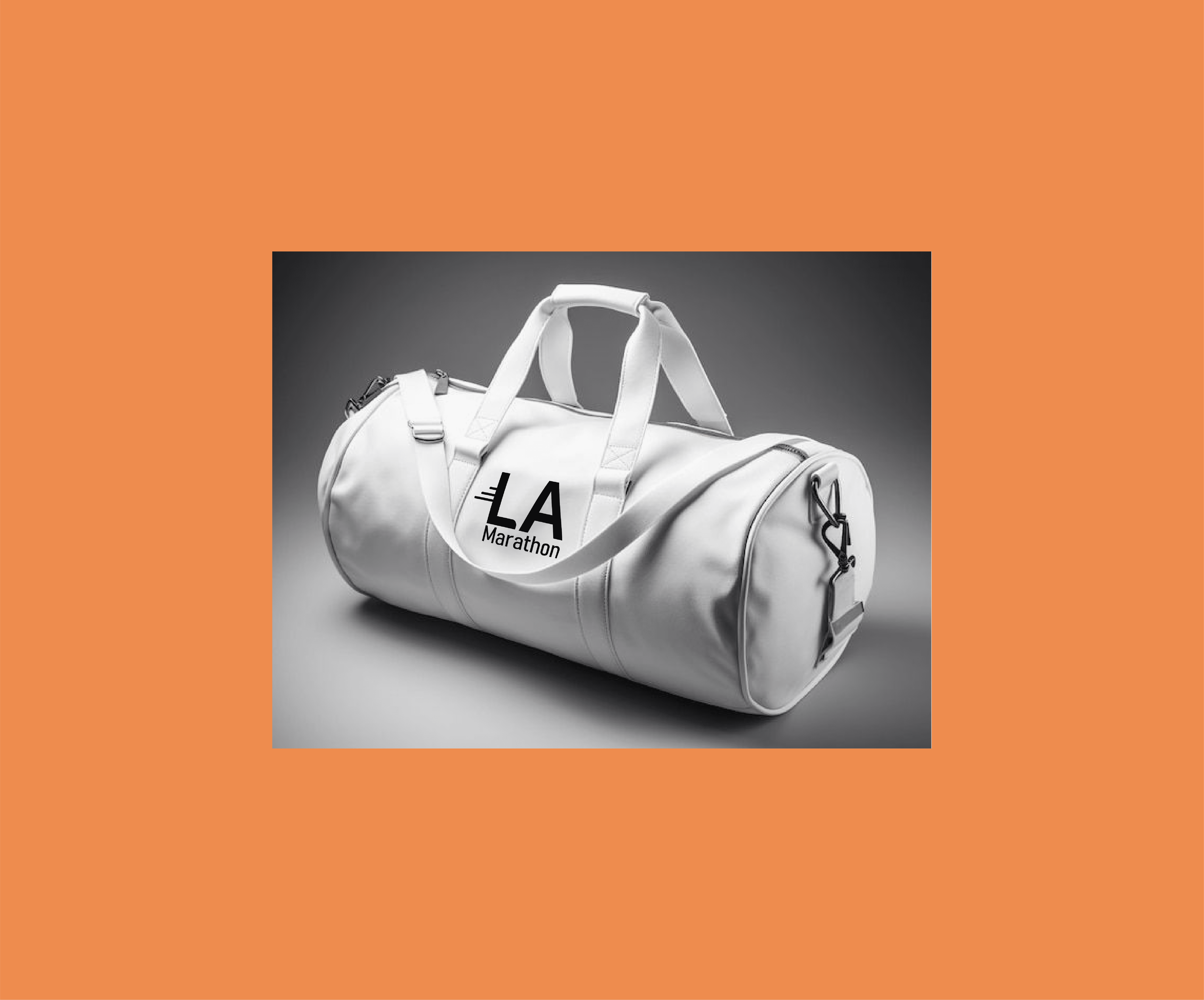
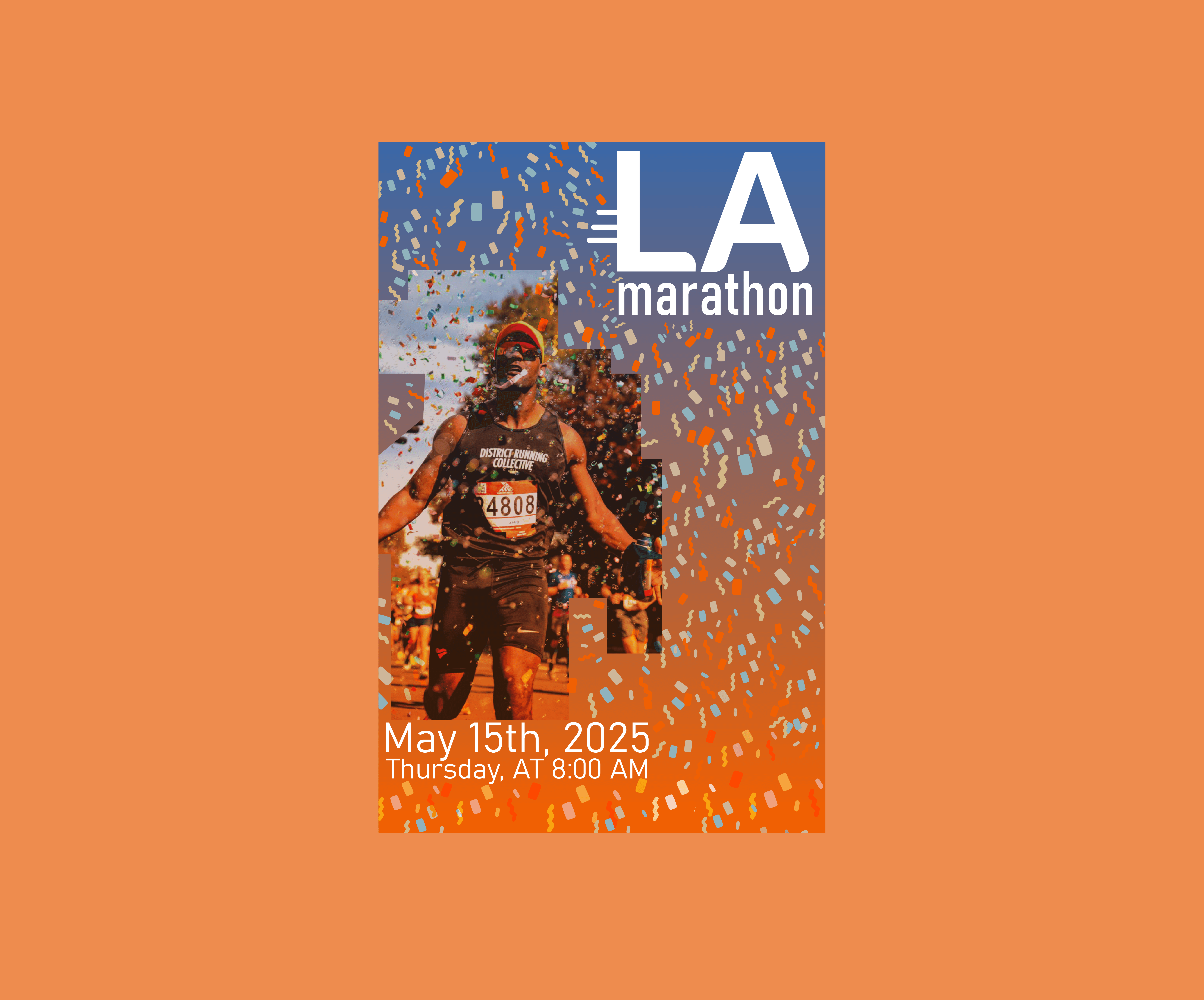
This case study presents a promotional campaign I designed for the Los Angeles Marathon, centered on a custom logo and the slogan “When you move, the city moves.” The campaign included a variety of branded assets: a large wall poster, an Instagram post, a Facebook event ad, and merchandise mockups such as a tote bag featuring the new logo. My goal was to create a cohesive identity system that not only promotes the marathon but also captures the collective energy and spirit of Los Angeles in motion. To bring this project to life, I combined multiple design disciplines, including graphic design, content design, branding, typography, and color theory. I applied Gestalt principles to create visual hierarchy and flow, ensured accessibility through strong contrast and readability, and developed consistent messaging across all platforms. I also crafted slogans that tied into the campaign’s theme of movement and community. Beyond visual execution, I considered media ethics and copyright practices, applying UX principles to ensure the campaign was both legally sound and user-centered.
Problem Area
The main challenge of this project was how to create a cohesive promotional campaign for the Los Angeles Marathon that would work seamlessly across multiple platforms — from posters and merchandise to social media ads — while still capturing the emotional energy of the event. Many marathon promotions tend to feel generic, focusing only on the race itself rather than the collective movement and community spirit that surrounds it. Another problem area was ensuring consistency in branding so that every asset, whether it was a Facebook ad, Instagram post, or tote bag, felt like part of the same campaign. Accessibility also played a key role, as the design needed to remain clear, legible, and visually balanced across both print and digital media. On top of this, I needed to be mindful of using text, imagery, and media ethically, applying copyright principles and UX best practices. The objective of this project was to build a visually unified, user-centered campaign that not only promoted the marathon but also inspired participation by emphasizing the theme of movement, community, and city pride.
Solution
The main challenge of this project was how to create a cohesive promotional campaign for the Los Angeles Marathon that would work seamlessly across multiple platforms — from posters and merchandise to social media ads — while still capturing the emotional energy of the event. Many marathon promotions tend to feel generic, focusing only on the race itself rather than the collective movement and community spirit that surrounds it. Another problem area was ensuring consistency in branding so that every asset, whether it was a Facebook ad, Instagram post, or tote bag, felt like part of the same campaign. Accessibility also played a key role, as the design needed to remain clear, legible, and visually balanced across both print and digital media. On top of this, I needed to be mindful of using text, imagery, and media ethically, applying copyright principles and UX best practices. The objective of this project was to build a visually unified, user-centered campaign that not only promoted the marathon but also inspired participation by emphasizing the theme of movement, community, and city pride.
Project images
hey


Deep Dive
Design
Branding
Summary
Branding was the foundation of this campaign. I designed a custom marathon logo to serve as the anchor for all visuals, ensuring instant recognition and consistency across platforms. The logo reflects energy and forward motion, aligning with the theme “When you move, the city moves.” By applying the logo consistently across print, digital, and merchandise, I created a cohesive identity system that tied the entire campaign together.
Keypoints
Designed a custom marathon logo as the core identity.
Built visual consistency across posters, ads, and merchandise.
Repeated the cut-up image border across all designs to create a unified look.
Reinforced the campaign slogan through the brand identity.
Graphic Design
Summary
The graphic design approach emphasized clarity, movement, and adaptability while keeping the campaign energetic and emotionally engaging. The wall poster was designed as the boldest piece of the campaign, meant to spark emotion and catch attention immediately. Layouts for all assets — poster, social media ads, and merchandise — were structured to balance simplicity with strong visual impact.
Keypoints
Designed the wall poster to be the most energetic, eye-catching asset.
Created layouts adaptable to multiple media (print, digital, merchandise).
Used consistent typography across all designs for brand cohesion.
Balanced simplicity with boldness to capture energy and motion.
Maintained consistency across all assets to strengthen recognition.
Colour Theory
Summary
Color played a critical role in capturing the energy of the marathon and reflecting the vibrancy of Los Angeles. I selected a bold palette that communicated movement and excitement while ensuring readability and accessibility. Careful attention was paid to contrast, making sure text stood out clearly against backgrounds in both print and digital formats.
Keypoints
Bold, energetic colors reflected the vibrancy of LA.
Strong contrast ensured accessibility and readability.
Applied color consistently across poster, ads, and merchandise.
Saturation levels balanced energy with legibility.
Colors tied to emotion: excitement, movement, and city pride.
Typography
Summary
Typography was kept consistent across all campaign assets to reinforce brand recognition and unity. I chose a bold, modern typeface that was legible across large-scale posters, digital ads, and merchandise. Hierarchy was established through type size and weight, ensuring the slogan and event name stood out most prominently.
Keypoints
Used the same typeface across all assets for consistency.
Chose bold, modern type for readability across scales.
Scaled typography to highlight slogan and event name first.
Balanced type hierarchy: logo → slogan → event details.
Reinforced cohesion by unifying all media under the same typographic voice.
Content Design
Summary
Content design centered on delivering clear, user-focused messaging that aligned with the campaign theme. I crafted slogans such as “When you move, the city moves” to tie into the collective spirit of the marathon. Messaging was placed strategically across platforms — posters for visibility, ads for engagement, and merchandise for memorability — all while staying consistent in tone and style.
Keypoints
Created slogans to reinforce movement and city pride.
Focused on clear, concise language across platforms.
Placed content strategically: posters for awareness, social ads for reach, merchandise for brand recall.
Maintained a consistent voice and tone across all assets.
Media Copyrights
Summary
Throughout the campaign, I applied ethical practices in handling media. I was mindful of copyright laws for images, typography, and design elements, ensuring that all assets were either original, licensed, or copyright-free. This reinforced professional standards and aligned the project with UX best practices.
Keypoints
Ensured compliance with copyright for media, fonts, and graphics.
Used original design work to avoid infringement.
Applied UX ethical standards to maintain professionalism.
Built a legally sound and scalable campaign system.
Gestalt Principles
Summary
Gestalt principles were applied to establish flow and clarity in the campaign visuals. Proximity grouped related text, continuity guided the eye through layouts, and figure-ground contrast emphasized key elements like the logo and slogan. The cut-up image border was also repeated across all designs to reinforce unity and guide visual flow, creating a recognizable brand element throughout the campaign.
Keypoints
Proximity: grouped text elements for clarity.
Continuity: guided the eye through layouts smoothly.
Figure-Ground: emphasized logo and slogan with strong contrast.
Common Fate: aligned motion elements to suggest forward movement.
Reused cut-up image border across assets for cohesive branding.
UX Research
Summary
My research focused on how audiences interact with promotional campaigns across media. I studied marathon branding and sports campaigns to see how they attract attention and build community identity. These insights influenced my decision to make the wall poster the campaign’s most energetic centerpiece, designed to spark an emotional response while still being accessible and easy to scan.
Keypoints
Researched marathon and sports campaigns for inspiration.
Observed how users interact with print, digital, and merchandise.
Applied insights to strengthen accessibility and readability.
Made the wall poster the emotional centerpiece to drive engagement.
Focused on building an emotional connection with the city’s community.
Reflecting on the Design Process Revealed the Importance of Structure, Credible Research, and Continuous Testing
Summary
Summary
This project taught me how to create a cohesive campaign across multiple platforms while balancing consistency, energy, and accessibility. I learned the importance of building a unified brand system where every asset — from posters to social media to merchandise — feels connected through typography, color, and layout choices. I also recognized how critical it is to design for emotion. By making the wall poster the most energetic piece, I saw how visuals can spark feelings and drive engagement beyond just delivering information. Another key lesson was accessibility: checking color contrast, typography legibility, and hierarchy across both digital and print formats made me more intentional about designing for all users. Looking back, one thing I would have done differently is extend my research beyond design trends. I could have interviewed actual marathon runners, asking open-ended questions to understand their motivations and personal stories. This deeper research would have given me richer insights to craft stronger slogans and a campaign that connected even more authentically with the running community. Overall, this project reinforced that strong campaigns aren’t just visually bold — they are strategic, user-centered, and built through iteration and research.
Keypoints
Learned how to unify multiple campaign assets into one cohesive brand system.
Understood the value of designing for emotion, not just information.
Strengthened skills in accessibility by testing contrast, typography, and readability.
Saw the importance of making one piece (the poster) the energetic anchor of the campaign.
Gained experience adapting branding consistently across print, digital, and merchandise.
Realized the value of deeper user research, such as interviewing marathon runners.
Recognized how insights from real users could have improved slogans and design direction.
Learned that successful campaigns combine bold visuals with strategy, research, and user-centered thinking.
Closing
Thank you for taking the time to review this case study. This project was an opportunity to combine branding, design strategy, and user-centered thinking into a cohesive promotional campaign for the Los Angeles Marathon. I hope it gave you insight into how I approach design challenges across different media, from concept to execution. If you’d like to connect, collaborate, or discuss this project further, my contact information is available at the bottom of the page.