Designing a Smarter, More Supportive Way to Navigate Credit
Credit Coach

Role:
Product Designer
Industry:
FinTech
Timeline:
4 Months
Platform:
Website
Turning Credit Confusion Into Clear, Personalized Guidance Through Research, AI, and Human Coaching
Overview
Overview
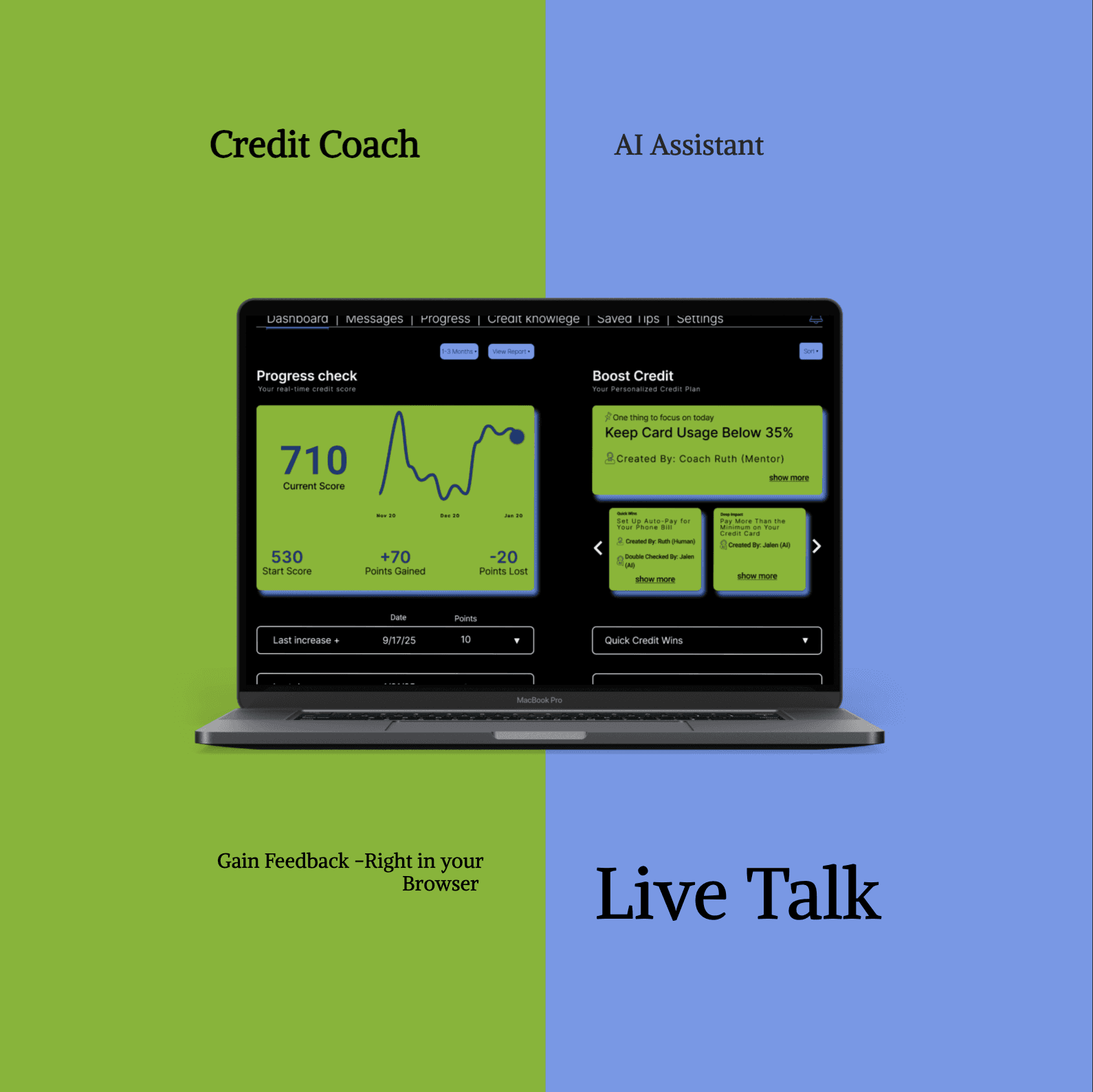
Many people struggle to understand what impacts their credit, which actions matter most, and what steps they should take next. Credit Coach addresses this by turning complex credit information into clear, personalized guidance that helps users make more confident financial decisions.
Problem Area
Existing credit tools often make it difficult to understand what is affecting their credit, which actions should come first, and how everyday financial decisions can impact their progress.
Solution
Credit Coach simplifies credit management by giving users personalized guidance, clear next steps, and proactive support. By combining AI insights with human coaching, the platform helps users understand their credit and make more confident financial decisions.
Building a Clear Project Roadmap Before Moving Into Action
Project Planning
I started by defining the project goals, target users, research questions, and overall design process. I planned to combine secondary research from credible federal sources with user interviews and competitive research to better understand credit behavior, user needs, and gaps in existing tools. From there, I created a roadmap that guided the project from research through design and testing.


Project Planning
Using Federal Research, User Interviews, and Competitive Analysis to Understand Credit Challenges
Research
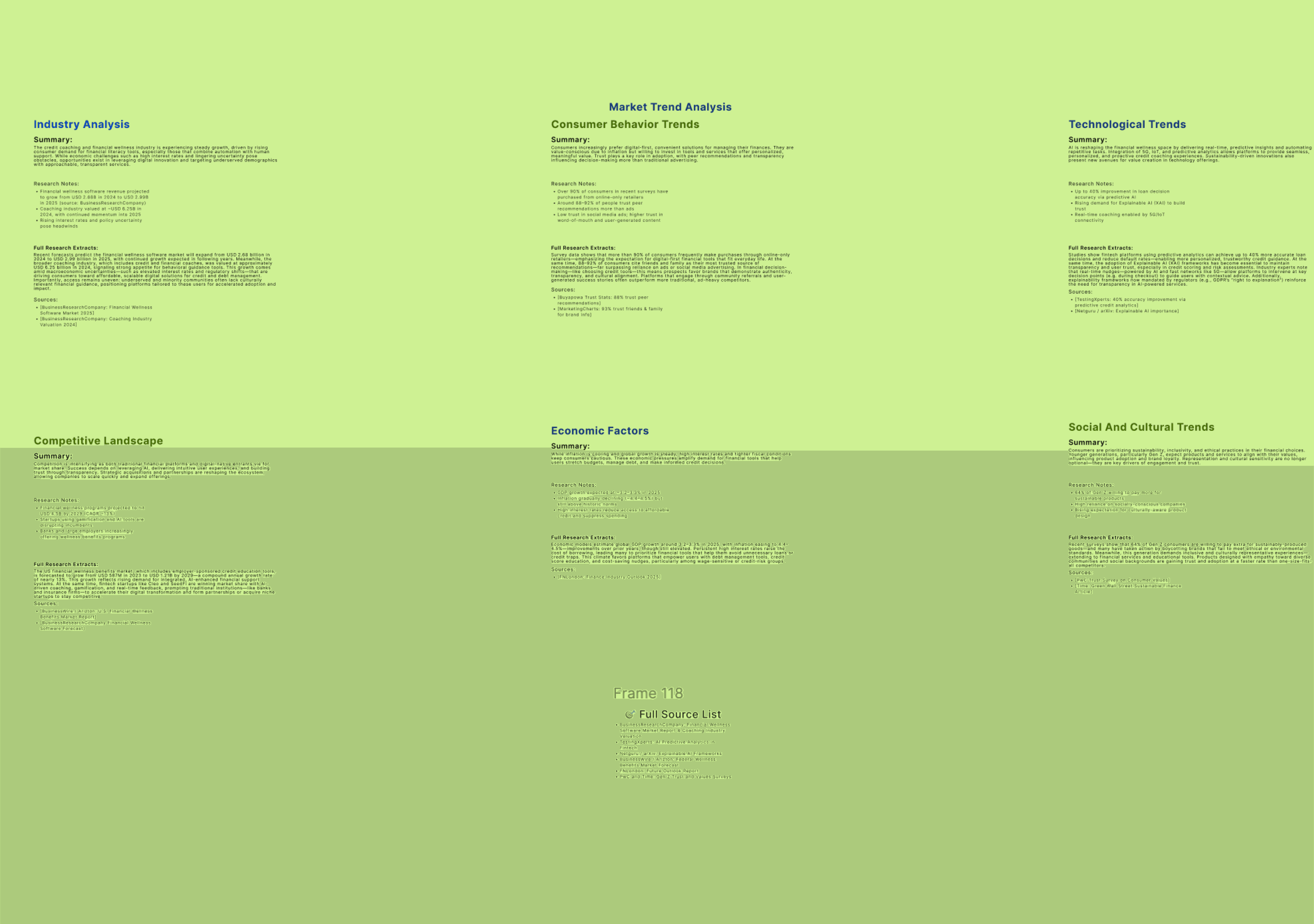
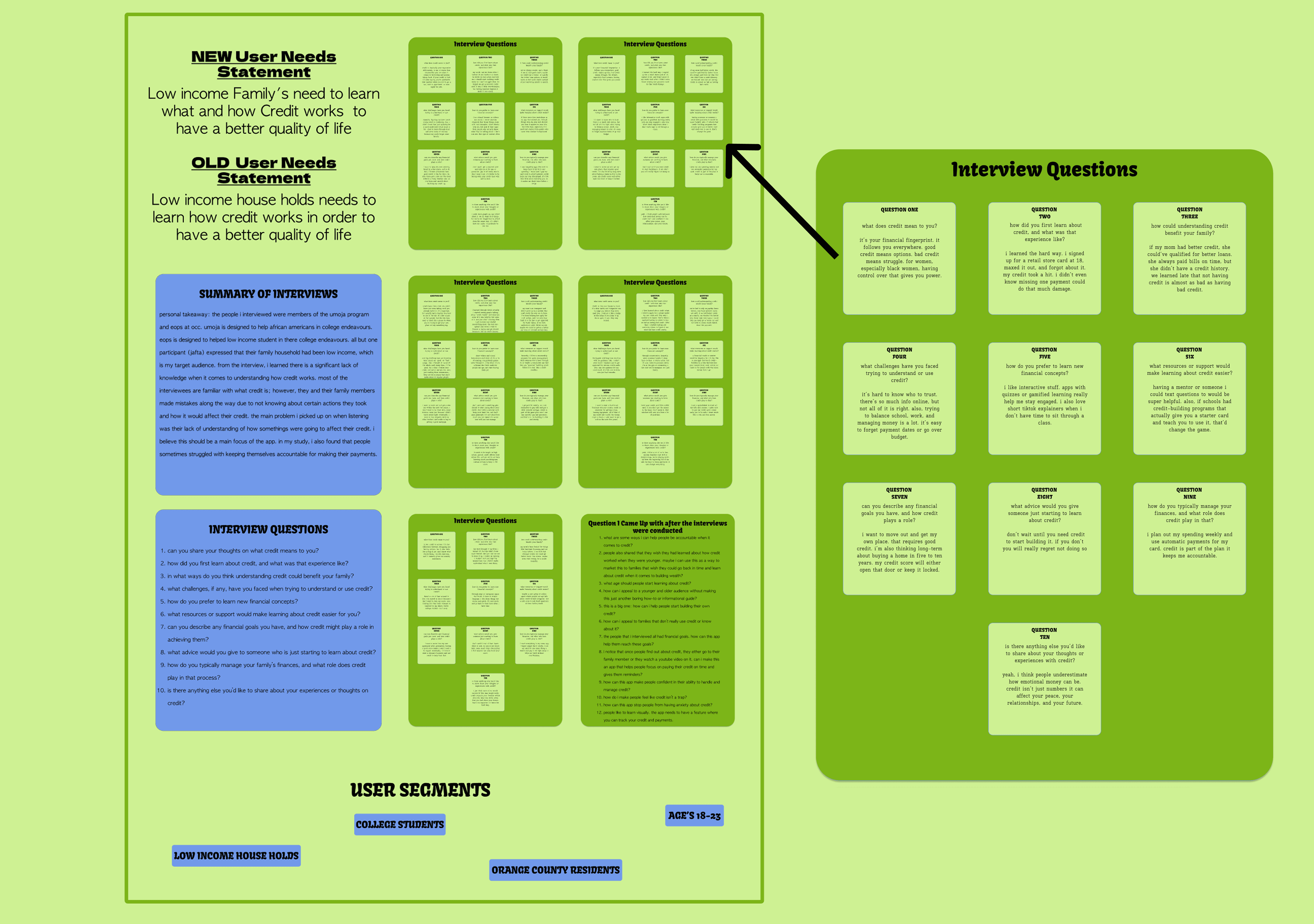
I combined federal research, user interviews, and competitive analysis to understand how people learn about, manage, and improve their credit. I used credible sources such as the CFPB, FDIC, and Federal Reserve to identify broader financial challenges, then compared those findings with user behavior and existing credit tools to uncover common pain points, knowledge gaps, and opportunities for better guidance.

Competitive Analysis

User Interviews
Personas


Translating User Needs Into Personalized Credit Tools and Actionable Next Steps
Ideation & Design
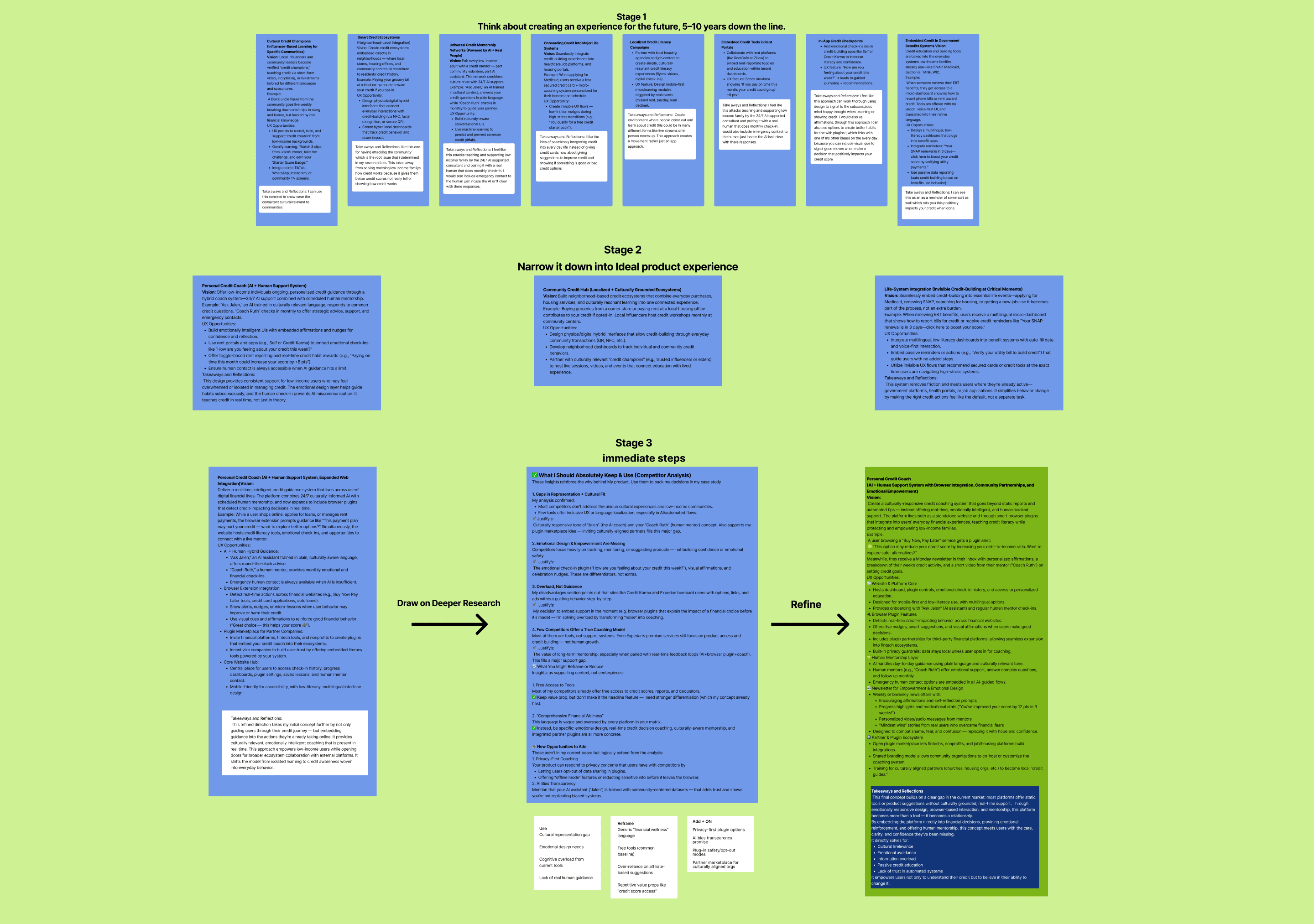
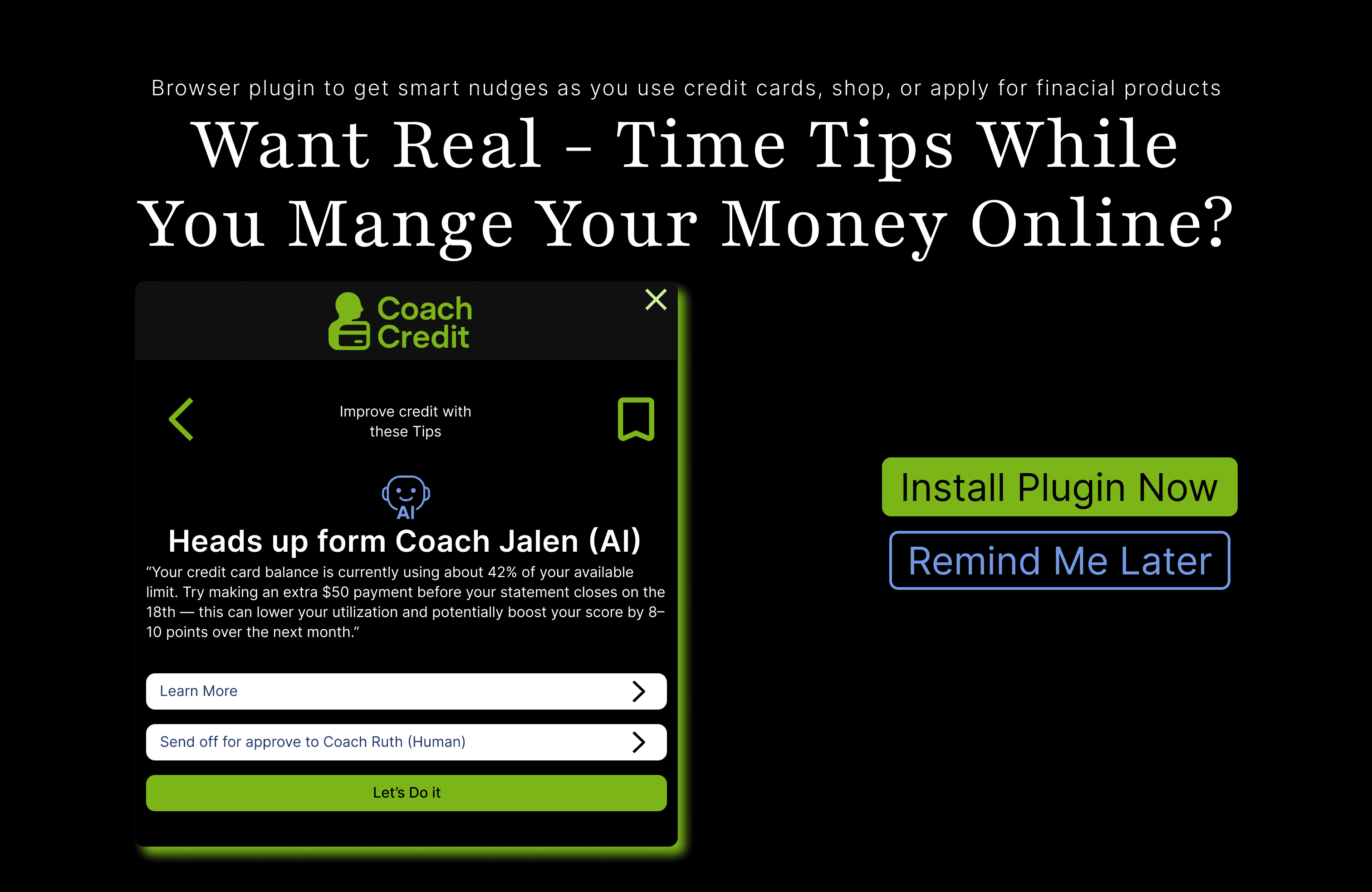
Using the research findings, I explored ways to make credit guidance simpler, more personalized, and easier to act on. I used AI to brainstorm feature ideas and generate early wireframe mockups, which helped me quickly explore different directions before refining the strongest concepts in Figma. From there, I designed the experience around prioritized next steps, AI-powered recommendations, human coaching, and proactive browser support.

Ideation

Wireframe Using AI
Final Design




Reflecting on How Research, AI, and Iteration Shaped the Final Experience
Testing & Final Reflection
Final Thoughts
One of the biggest tradeoffs in this project was balancing how much information to show users without making the experience feel overwhelming. Credit is complex, so I had to simplify financial concepts while still giving users enough context to make informed decisions. I also explored several feature ideas, but prioritized the ones that directly supported the core experience, such as personalized next steps, AI guidance, human coaching, and proactive browser support.
If I continued this project, my biggest priority would be testing the product with real users to understand whether the guidance is actually clear, useful, and easy to act on. I would also test different versions of the dashboard and browser experience, measure task completion and comprehension, and validate whether users trust the AI recommendations. Next time, I would also create a more structured system for organizing research earlier in the process and involve users throughout more stages of design instead of relying heavily on research before moving into the final experience.